
Call us
301-363-4651 (Available 9 a.m. to 5 p.m. CST from Monday to Friday)

| Code | CSB-RA010418A14acHU |
| Size | US$210 |
| Order now | |
| Image |
|
| Have Questions? | Leave a Message or Start an on-line Chat |
| Application | Recommended Dilution |
|---|---|
| WB | 1:500-1:2000 |
| ICC | 1:50-1:500 |
| IF | 1:30-1:200 |
Acetylation of histone H3 at lysine 14 represents a critical epigenetic modification that plays a central role in chromatin remodeling and transcriptional activation. This post-translational modification serves as a key marker for active gene expression and is dynamically regulated in response to cellular signaling, making it an essential target for researchers investigating epigenetic mechanisms, cell differentiation, and disease states where chromatin dysregulation contributes to pathology.
This recombinant rabbit monoclonal antibody, clone 3H3, offers the reproducibility and consistency that epigenetics research demands. Because recombinant antibodies are produced from defined sequences rather than traditional hybridoma methods, you can expect uniform performance across experiments and over time, eliminating the lot-to-lot variability that can complicate longitudinal studies or multi-site collaborations.
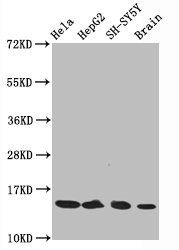
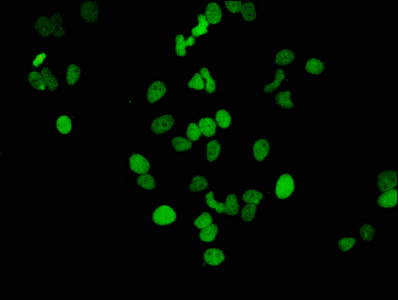
Validation across multiple experimental platforms demonstrates this antibody's versatility in your workflow. Western blot analysis confirms specific detection of the expected 15 kDa band in HeLa, HepG2, and SH-SY5Y human cell lysates, as well as rat brain tissue, providing cross-species reactivity for comparative studies. Immunocytochemistry and immunofluorescence applications have been validated in HeLa cells, with immunofluorescence studies utilizing sodium butyrate treatment to enhance histone acetylation signals, confirming the antibody's ability to detect dynamic changes in acetylation status.
The antibody is supplied in a glycerol-containing buffer optimized for long-term stability, and its unconjugated format allows flexibility in choosing your preferred detection system. Whether you are mapping genome-wide acetylation patterns, investigating transcriptional regulation, or exploring therapeutic targets in cancer and neurological disorders, this antibody provides a reliable tool for advancing your epigenetics and nuclear signaling research.
There are currently no reviews for this product.





